



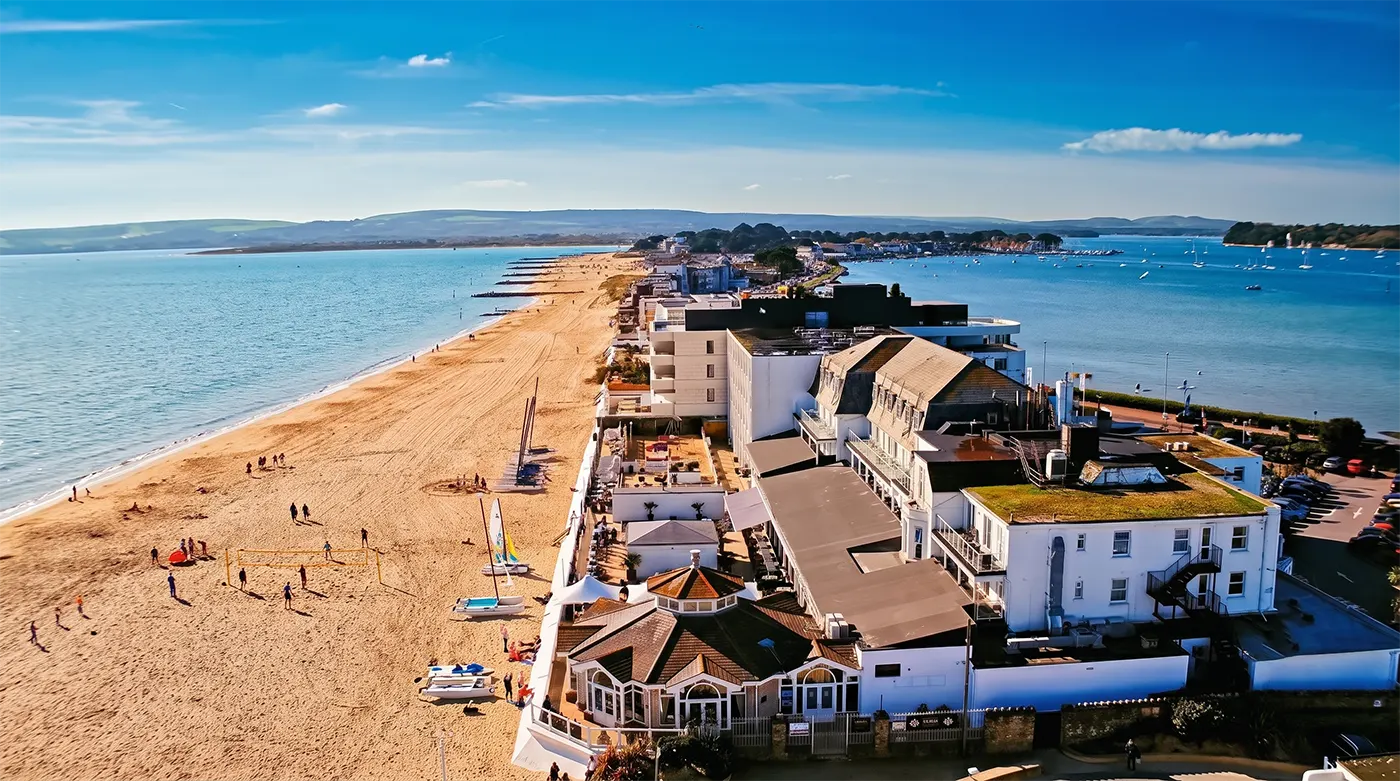
Moving to Sandbanks: A House Move in Style on Poole Harbourside
Moving to Sandbanks isn’t quite like moving anywhere else in Dorset.
The properties are often architect-designed, the belongings inside them are often genuinely valuable, and the peninsula’s roads and access points weren’t built with removal lorries in mind.
Whether you’re buying on Sandbanks itself, in Canford Cliffs, Lilliput, around Evening Hill, or on Poole Quay, a house move here needs the same care and planning that went into the property itself.
Table of Contents
What makes moving to Sandbanks different
For most house moves, the priority is speed and cost.
For a move to Sandbanks or the wider Poole Harbourside, the priority shifts: protecting art, antiques and bespoke furniture matters more than shaving an hour off the day, and access, narrow lanes, gated driveways, restricted parking on the peninsula in summer, needs planning rather than working it out on the morning of the move.
That doesn’t mean the process needs to be complicated.
It means working with a mover who has done this specific kind of move before, rather than treating a waterfront property the same way as a standard three-bedroom semi.
Moving to Sandbanks also means thinking slightly differently about timing, storage and logistics than you would for a typical move, which is what the rest of this guide covers.
It’s also worth saying plainly: a move to this part of Dorset is as much a lifestyle decision as a property purchase. Buyers are typically choosing the water, the light, and a slower pace of life alongside the square footage, and a good move should reflect that rather than feeling like any other relocation.
The Sandbanks and Poole Harbourside property market

Sandbanks remains one of the most expensive stretches of coastline in the UK.
According to Rightmove’s house price data, sourced from HM Land Registry and updated in May 2026, the average sold price in Sandbanks over the past year was just over £1 million, with detached homes averaging close to £1.7 million and flats averaging around £724,000.
Supply is part of what keeps prices resilient: the peninsula has only a few hundred residential plots in total, and many of the original properties have been redeveloped into contemporary architect-designed homes over the past decade.
Prices ease slightly as you move inland from the peninsula itself, through Canford Cliffs, Lilliput and Evening Hill, though “easing” is relative in this part of Poole. Buyers are typically trading a beachfront address for more land, more space, or a quieter, more private setting.
The wider Poole Harbourside, taking in Parkstone, Westbourne and the stretch towards Poole town centre, offers a more varied market again, with period conversions and family houses sitting alongside newer waterside apartments.
It’s a useful area to widen the search into if the peninsula itself is out of reach, since much of the same harbourside lifestyle is available a short drive or cycle from the water rather than directly on it.
Renting before you buy, or letting while you decide

Not everyone moving to Sandbanks is buying outright straight away. Market data from Martin & Co Lovett shows that rental demand on the peninsula remains consistently strong, driven by limited stock, a mix of corporate tenants, overseas buyers taking time to commit, and holiday lets in the summer season.
If you’re relocating for work, or you want a season living on the peninsula before you commit to buying, renting first is a genuinely common route in rather than a compromise.
Whichever route you take, our secure storage facility is ideal for this situation: a safe place to store furniture and belongings while you’re between a rental and a permanent purchase, rather than having to fully furnish a short-term let.
Design trends shaping Sandbanks homes
Much of what makes moving to Sandbanks feel different starts with the properties themselves.
Many of the peninsula’s original 1960s and 70s bungalows have been replaced over the past decade by architect-led rebuilds: floor-to-ceiling glass facing the water, open-plan living spaces, passenger lifts in multi-storey homes, and, increasingly, wellness additions like private pools, gyms, and cinema rooms.
Several recent developments have included features such as private wellness suites and dedicated cinema rooms as standard rather than as exceptions.
For a move, this matters both practically and aesthetically.
Open-plan glass-heavy homes often have fewer conventional doorways and more large-format windows and sliding doors, which changes how larger furniture needs to be brought in and positioned.
It’s another reason why a proper survey ahead of the move matters more here than in a standard house move, since the property itself is often part of the specialist-handling conversation.
The neighbourhoods worth knowing

| Area | Character | Best suited to |
| Sandbanks | Waterfront apartments and architect-designed homes on a finite peninsula, many rebuilt in recent years | Buyers wanting direct beach or harbour frontage and a genuinely rare address |
| Canford Cliffs | Clifftop houses and apartments just inland from Sandbanks, generally more space for the money | Families or downsizers wanting the postcode and the views without the peninsula premium |
| Lilliput | Village-feel streets close to Salterns Marina, a mix of period and newer builds | Buyers wanting a walkable village centre alongside harbour access |
| Evening Hill / Branksome Park | Large detached homes on leafy, private roads, several with harbour glimpses | Buyers prioritising privacy and space over beachfront proximity |
| Poole Quay / Old Town | Georgian townhouses and marina apartments around the historic quayside | Buyers wanting harbourfront town living with restaurants and the marina on the doorstep |
Moving art, antiques and high-value items safely

Waterfront properties in this part of Poole tend to come with waterfront-scale belongings: statement furniture, art collections, wine, and pieces that were chosen for a specific room rather than picked up flat-packed.
As a British Association of Removers member, Maidmans works to an audited Code of Practice that covers exactly this kind of specialist handling, and we’ve been doing it from our Poole base for over 40 years.
Bespoke packing materials, individually wrapped art handling, and careful inventory management all matter more here than on an average house move, simply because replacing a damaged item isn’t as simple as a trip to a furniture showroom.
A good mover will ask about these pieces at the survey stage rather than treating them as an afterthought on the day of the move.
Planning logistics: access, timing and the peninsula in summer
Sandbanks and the surrounding roads get genuinely busy in the summer months, particularly around the chain ferry queue and along Panorama Road and Shore Road on warm weekends.
Residents’ parking permits are common on the peninsula, and visiting vehicles, including removal lorries, sometimes need advance permission or a specific loading window arranged with the local authority.
- Book well ahead for a summer move, since access windows and parking arrangements take longer to organise in peak season than they do in winter.
- Confirm any permit or loading requirements with your mover at survey stage, not on the morning of the move.
- Consider a weekday move where possible, since weekend traffic to the beach and chain ferry can add real time to a moving day.
- Flag gated access or private roads early, since some of the more secluded properties around Evening Hill and Branksome Park require advance notice for delivery vehicles.
Getting the timing right for a premium move

Property chains involving higher-value homes often move more slowly than average, simply because there are fewer buyers at that price point and more scope for delays on either side.
Add in the number of Sandbanks properties currently being rebuilt or renovated, and it’s common for a move to need a staging point rather than a single clean handover.
Building in flexibility, whether that’s short-term storage, a phased move, or simply more notice than a standard house move needs, tends to save far more stress than it costs.
Our house removals page covers how we plan a move from first survey to completion, and it’s worth getting us involved as early as possible, ideally before you’ve even exchanged contracts.
Working alongside your estate agent and solicitor
With fewer buyers at this price point, chains on Sandbanks and Poole Harbourside properties often move at a different pace than a typical residential sale, and exchange and completion dates can shift more than once before they’re confirmed.
Estate agents working in this market are usually used to coordinating closely with removal companies, adjusting surveys and moving dates as the chain firms up rather than locking everything in too early.
It’s worth asking your solicitor and estate agent to loop your removal company in as soon as a completion date looks realistic, rather than waiting for it to be fully confirmed.
That gives everyone, including our team, enough notice to plan around access restrictions, specialist packing, and any storage that might be needed if the two ends of the chain don’t quite line up.
MoveProtect and safeguarding high-value belongings

Standard removals cover is rarely enough for the kind of contents found in a typical Sandbanks or Poole Harbourside property. Before moving day, it’s worth having art, antiques, and any particularly valuable furniture formally valued, or at least clearly documented with photographs, so that the MoveProtect cover reflects what’s genuinely at stake rather than a generic estimate.
A reputable mover will talk through declared values with you at the survey stage and confirm exactly what’s covered, and for what amount, in writing before the move.
That conversation is worth having properly rather than assuming standard cover is automatically sufficient, particularly for one-off or irreplaceable pieces.
What affects the cost of moving to Sandbanks
A proper quote always follows a survey rather than a guess over the phone, but the factors that tend to move the price on a Sandbanks or Poole Harbourside move are fairly consistent:
- Property size and volume, as larger waterfront homes naturally take longer to pack and load.
- Access and parking, particularly for peninsula addresses with restricted permits or gated entry.
- Specialist packing for art, antiques, and bespoke furniture that require individual handling.
- Timing and season, since summer moves on the peninsula generally need more notice and planning than off-season ones.
- Storage, if your new property is still being finished, rebuilt, or renovated.
Schools and commuting from Sandbanks and Poole Harbourside

Families moving to the area are generally well served. Poole Grammar School and Parkstone Grammar School are both well-regarded state grammar options within easy reach, and Canford School, a leading independent school, sits a short drive away near Wimborne.
Bournemouth Airport is around fifteen minutes by car for domestic and short-haul flights, and Poole railway station connects to London Waterloo in around two hours, making the area workable for those who need to travel to London periodically rather than daily.
Life on the water after the move

Part of what makes this stretch of coast worth the price is what’s on the doorstep. Sandbanks Beach holds Blue Flag status and is a short walk from almost anywhere on the peninsula.
Poole Harbour itself is among the largest natural harbours in Europe, and sailing, paddleboarding and the Sandbanks chain ferry across to Studland and the Purbecks are all part of daily life here rather than occasional treats. Salterns Marina in Lilliput and the golf course backing onto Canford Cliffs round out what’s on offer without needing to leave the area.
The dining scene has grown alongside the property market.
Sandbanks is home to a well-regarded seafood restaurant from a nationally known chef, and Poole Quay’s mix of harbourside restaurants, bars and independent shops means a genuinely good night out is available without needing to drive into Bournemouth.
For anyone weighing up whether the peninsula lifestyle matches the price tag, it’s worth spending a weekend there before committing; most buyers find the day-to-day rhythm of the place is exactly what sold them on it in the first place.
Coastal living: what to plan for beyond the move itself
Living on a low-lying peninsula surrounded by water brings a few practical considerations worth knowing before you move in, rather than discovering them later.
Salt air accelerates wear on external metalwork, render and timber, so many Sandbanks homeowners budget for more frequent exterior maintenance than they would inland.
It’s also worth checking flood risk and buildings insurance requirements specifically for your property with your insurer, since coastal and harbourside addresses can carry different terms to a standard inland policy.
None of this should put anyone off; homes on the peninsula have stood up to coastal conditions for decades, but it’s the kind of detail worth raising with your surveyor and insurer alongside the move itself, rather than treating the move and the property’s long-term upkeep as entirely separate conversations.
A quick checklist for moving to Sandbanks in style
- Get a survey booked early, ideally before you’ve exchanged contracts
- Flag any art, antiques or bespoke furniture that need specialist packing
- Check whether your new property needs a parking permit or loading window arranged in advance
- Consider a weekday move if you’re relocating during the summer season
- Arrange short-term storage if your new home isn’t quite ready, rather than rushing the handover
- Confirm MoveProtect and liability cover in writing before moving day
Frequently asked questions about moving to Sandbanks
Is Sandbanks difficult to access for a removals lorry?
Some roads on the peninsula are narrow, and parking is genuinely limited during the summer season. An experienced local mover will plan for this at the survey stage rather than discovering it on moving day.
How much does a house move to Sandbanks typically cost?
Cost depends on volume, access, and how much specialist handling of your belongings is needed, so it’s always based on a proper survey rather than a phone estimate. Given the value of what’s often being moved, most buyers prioritise careful handling over the lowest price.
What if my new property isn’t ready when I need to move?
This is common on the peninsula given how much redevelopment is underway. Secure storage lets you move out on your own timeline rather than the building’s, and hold your belongings safely until the property is ready.
Are Canford Cliffs and Lilliput cheaper than Sandbanks?
Generally yes, though prices remain high by national standards. Canford Cliffs and Evening Hill tend to offer more land and space for the money, while Lilliput offers a more village-like setting close to Salterns Marina.
Does Maidmans handle art and antiques as part of a house move?
Yes. As BAR members working to an audited Code of Practice, we handle high-value and delicate items as a routine part of how we plan and carry out a move, not as an add-on.
Is it better to rent before buying on Sandbanks?
Many buyers do exactly this, particularly if they’re relocating for work or want a season on the peninsula before committing. Rental demand stays strong year-round, so it’s a well-established route in rather than an unusual one.
What time of year is best for a move to Sandbanks?
Outside the summer peak, it tends to be easier, simply because roads, parking, and the chain ferry queue are quieter. A summer move is entirely possible; it just needs to be booked further in advance.
Do I need specialist packing for a contemporary, glass-heavy Sandbanks property?
Often, yes. Open-plan homes with large glass doors and fewer conventional entry points can change how furniture is brought in, so it’s worth flagging your property’s layout at the survey stage rather than assuming a standard approach will work.
Is Poole Harbourside a good alternative if Sandbanks itself is out of budget?
Yes. Areas like Parkstone and Westbourne offer a more varied property market with much of the same harbourside lifestyle, generally at a more attainable price point than the peninsula itself.
Planning a move to Sandbanks, Poole Harbourside, or anywhere else in Dorset? Get in touch with Maidmans for a free, no-obligation survey, and we’ll plan the move around your property and your timeline.